ADHD Awareness Month: Why an ADHD Evaluation Before Medication Matters
Understanding ADHD symptoms, accurate diagnosis, and the importance of personalized psychiatric care.
October is ADHD Awareness Month, a time to increase understanding of Attention-Deficit/Hyperactivity Disorder (ADHD) and encourage people to seek appropriate care. An ADHD evaluation before medication is an important step toward an accurate diagnosis and a safe, effective treatment plan.
Today, more adults are recognizing symptoms such as poor concentration, forgetfulness, restlessness, and difficulty staying organized. As a result, many are reaching out to psychiatric providers for answers and treatment.
Seeking help is a positive first step. However, difficulty concentrating does not always mean someone has ADHD. Likewise, medication may not always be the best starting point.
At Psychiatry for Healthy Living, Dr. Wendy Weinstein believes thoughtful psychiatric care begins with understanding the whole person, not simply treating a list of symptoms.
Why Are More Adults Asking About ADHD?
ADHD often begins in childhood, but many people do not receive a diagnosis until adulthood. In fact, some adults spend years struggling with symptoms without understanding why.
Meanwhile, increased awareness through social media, online resources, and mental health education has encouraged more people to recognize possible signs of ADHD.
Common symptoms may include:
- Difficulty focusing or completing tasks
- Frequently forgetting appointments or responsibilities
- Problems with organization and time management
- Restlessness or difficulty relaxing
- Impulsive decisions or interruptions
- Trouble following through on daily responsibilities
These challenges can affect work, school, relationships, and everyday life.
However, having some of these symptoms does not automatically mean a person has ADHD. Therefore, a professional assessment is important before beginning treatment.
Is It ADHD, Anxiety, Depression, or Something Else?
One reason an ADHD evaluation before medication matters is that several conditions can cause similar symptoms.
For example, someone experiencing depression may struggle with concentration, memory, and motivation. Likewise, anxiety can make it difficult to focus because persistent worry takes up so much mental energy.
Other possible causes include:
- Sleep problems: Poor sleep can affect attention, memory, and mood.
- Chronic stress: Ongoing stress can make everyday tasks feel overwhelming.
- Depression: Low energy and reduced motivation can interfere with concentration.
- Anxiety disorders: Racing thoughts and excessive worry can make focusing difficult.
- Other health conditions: Certain medical conditions and medications can affect attention and thinking.
In addition, ADHD may occur alongside anxiety, depression, or another psychiatric condition.
Because symptoms often overlap, a psychiatrist must look at the full clinical picture. Most importantly, identifying the underlying cause helps guide appropriate treatment.
Why an ADHD Evaluation Before Medication Is Important
Medications such as Adderall, Vyvanse, and Ritalin can help many people manage ADHD symptoms. However, these medications require careful clinical consideration.
Before recommending medication, a psychiatric provider should evaluate the patient’s symptoms, medical history, and treatment needs.
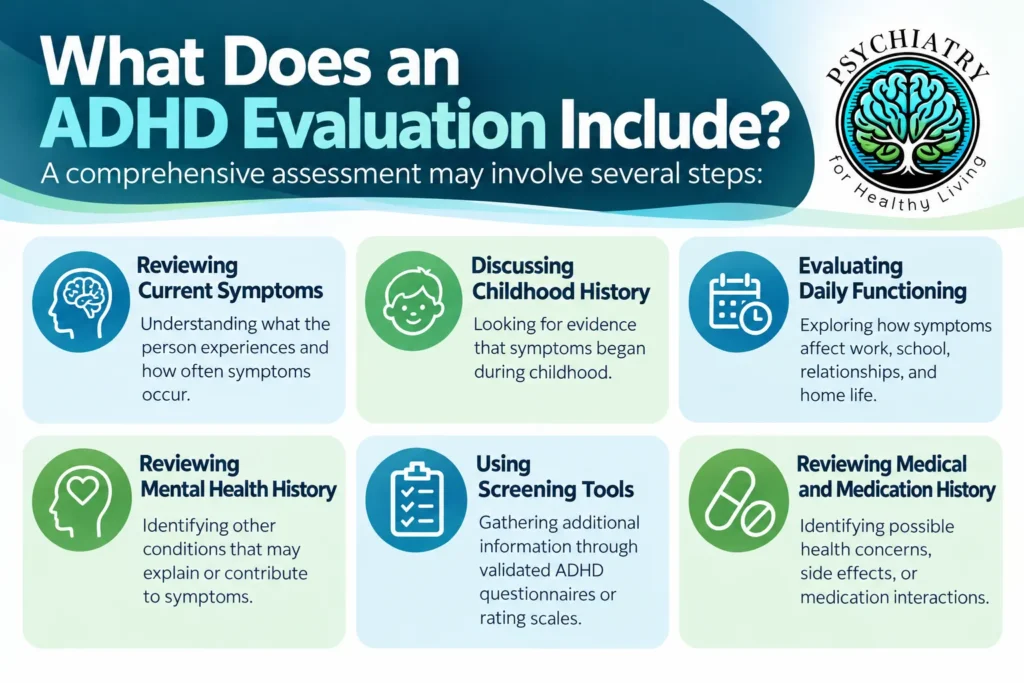
What Does an ADHD Evaluation Include?
A comprehensive assessment may involve several steps:
- Reviewing current symptoms: Understanding what the person experiences and how often symptoms occur.
- Discussing childhood history: Looking for evidence that symptoms began during childhood.
- Evaluating daily functioning: Exploring how symptoms affect work, school, relationships, and home life.
- Reviewing mental health history: Identifying other conditions that may explain or contribute to symptoms.
- Using screening tools: Gathering additional information through validated ADHD questionnaires or rating scales.
- Reviewing medical and medication history: Identifying possible health concerns, side effects, or medication interactions.
Depending on the findings, a provider may also recommend psychological or neuropsychological testing.
However, no single test can diagnose ADHD on its own. A qualified clinician can often establish a diagnosis through a thorough clinical evaluation without formal neuropsychological testing.
The purpose of an evaluation is not to delay treatment. Instead, it helps ensure that treatment addresses the right condition.
Why New Patients May Need an Evaluation Before ADHD Medication
Patients who previously received an ADHD diagnosis or prescription may expect to continue the same treatment when visiting a new psychiatrist.
That expectation is understandable, especially when a medication has helped manage symptoms.
However, establishing care with a new psychiatric provider involves reviewing more than a prescription history.
A psychiatrist must understand the patient’s current symptoms, past treatment, medical history, and overall mental health. Additionally, the provider must determine whether the existing treatment remains safe and appropriate.
For this reason, a previous ADHD diagnosis or medication prescription does not automatically guarantee that a new provider will prescribe the same medication.
Instead, the provider may recommend an updated assessment, request previous medical records, or gather additional information before making treatment decisions.
This approach supports both patient safety and responsible prescribing.
How Can New Patients Prepare?
Patients can help make their first appointment more productive by bringing:
- Previous ADHD evaluation reports, if available
- Relevant psychiatric or medical records
- A list of current and previous medications
- Information about past treatment benefits or side effects
- Examples of symptoms affecting daily life
As a result, the psychiatric provider can better understand the patient’s history and discuss appropriate next steps.
Does Everyone With ADHD Need Medication?
No. Although medication is an effective treatment option for many people with ADHD, every patient has different needs.
For some individuals, stimulant medication may significantly improve attention and daily functioning. Others may benefit from nonstimulant medications or additional support.
Depending on the patient’s needs, treatment may include:
- Stimulant or nonstimulant medications
- Psychotherapy, including cognitive behavioral therapy
- Organizational and time-management strategies
- Behavioral support and lifestyle changes
- Treatment for coexisting anxiety, depression, or sleep problems
Furthermore, medication decisions should consider potential benefits, side effects, medical conditions, and personal treatment goals.
Ultimately, effective ADHD care should improve daily functioning and overall quality of life, not simply increase concentration.
Can Social Media Help Identify ADHD?
Social media has helped increase awareness of adult ADHD. Consequently, more people may recognize symptoms that previously went unnoticed.
However, online videos and self-assessment quizzes cannot replace a professional diagnosis.
For example, difficulty focusing, procrastination, and forgetfulness are common experiences. These symptoms may have many causes.
Therefore, people who identify with online ADHD content should consider speaking with a qualified healthcare professional rather than assuming they have the disorder.
For additional information, visit the National Institute of Mental Health’s ADHD resource page.
The Centers for Disease Control and Prevention also provides information about ADHD symptoms, diagnosis, and treatment.
ADHD Awareness Month: Focus on Understanding, Not Just Medication
ADHD Awareness Month reminds us that people deserve accurate information, compassionate care, and access to appropriate treatment.
For individuals struggling with attention, organization, or impulsivity, seeking help can provide valuable answers.
However, the goal should not simply be to obtain a particular diagnosis or prescription. Instead, the goal should be to understand what is causing the symptoms and identify the most effective treatment.
At Psychiatry for Healthy Living, Dr. Wendy Weinstein emphasizes individualized psychiatric care that considers each patient’s unique symptoms, history, and mental health needs.
Whether someone is exploring a possible ADHD diagnosis or seeking ongoing psychiatric care, a thoughtful evaluation provides an important foundation for treatment.
This ADHD Awareness Month, remember: The right diagnosis helps guide the right treatment.
Take the First Step Toward Better Mental Health
If difficulties with concentration, organization, mood, or daily functioning are affecting your quality of life, consider seeking a professional psychiatric evaluation.
Learning more about your symptoms can help you make informed decisions about your mental health.
To learn more about Psychiatry for Healthy Living and Dr. Wendy Weinstein, visit our website’s About page or contact Psychiatry for Healthy Living.
Disclaimer: This article is for educational purposes only. It does not replace professional medical advice, diagnosis, or treatment. Medication decisions should always involve a qualified healthcare provider.

Comments are closed